Finding The Perfect IT Balance: Why Companies Are Choosing Hybrid IT in 2026
For the last decade, the technology sector has marched to the beat of a single drum: migration. The prevailing wisdom was that physical servers were dinosaurs, destined for extinction. Business owners were told that the cloud offered infinite scalability, reduced costs, and superior security. Consequently, organizations rushed to decommission their server rooms and shift every byte of data to platforms like AWS, Azure, and Google Cloud.
However, a counter trend has emerged that is reshaping on-site and cloud IT.
Businesses that went “all in” on the cloud are beginning to pull specific workloads back onto physical hardware located on their own premises. This isn’t a retreat caused by a fear of technology. It’s a calculated financial and operational correction. After years of monthly invoices, companies are realizing that the cloud is not a magic bullet for every problem. For many, the rental model of the cloud has become unsustainable, leading to a resurgence of local infrastructure that offers predictable costs and absolute control.
Table of Contents
The Financial Reality: Rent vs. Mortgage
The primary driver of repatriation is cost. The cloud was pitched as a money saver because it converted Capital Expenditure (CapEx – buying hardware) into Operating Expenditure (OpEx – monthly subscriptions). For startups, this was perfect. But for mature companies with stable workloads, the math often stops working.
Cloud billing is complex. You pay for storage, but you also pay for compute power (CPU cycles) and, crucially, for data transfer. These are known as “egress fees.” Every time your employees open, save, or move a large file from the cloud, the meter is running.
Over a five-year period, the cumulative cost of these subscriptions often dwarfs the cost of simply buying a server. It’s the economic equivalent of renting an apartment versus buying a house. Renting offers flexibility, but after twenty years of paying rent, you own nothing. Buying a server allows you to lock in your cost. Once the hardware is paid for, your ongoing expense drops to electricity and maintenance, providing a much higher long-term return on investment for steady workloads.
The Performance Bottleneck: Physics Still Applies
Despite the marketing hype, cloud computing cannot overcome the laws of physics. Data has to travel. When your server is in a data center three states away, there is an unavoidable delay, known as latency, as information travels back and forth over the internet.

Data files are larger than ever. 4K video footage, complex 3D architectural renderings, and massive datasets for AI processing clog bandwidth. For industries that rely on real time speed, such as manufacturing, engineering, and media production – slow speeds are a productivity killer.
Moving high volume data processing back in-house eliminates the internet bottleneck. A local server communicates with workstations over a high-speed Local Area Network (LAN), providing near instant access. This “Edge Computing” strategy ensures that your team is waiting on their creativity, not their internet connection.
Reclaiming Data Sovereignty
Control is the third pillar of the repatriation movement. When your data lives in a public cloud, it resides on infrastructure you do not own, managed by people you do not employ, in a location you cannot visit.
For regulated industries or companies with highly sensitive intellectual property, this “black box” approach is becoming a liability.
The “Noisy Neighbor” Effect

In a public cloud, your data shares space on a physical server with data from other companies. While logically separated, performance issues with a “neighbor” can sometimes impact your speed.
Jurisdictional Risk
Data stored in the cloud is subject to the laws of the country where the data center is located. Repatriating data ensures it stays within your specific legal jurisdiction, simplifying compliance with strict regulations like GDPR or CMMC.
By bringing data back in-house, you regain total sovereignty. You decide exactly when maintenance windows occur; you control the physical security of the room, and you keep your proprietary secrets gapped from shared public infrastructure.
The “Hybrid” Compromise
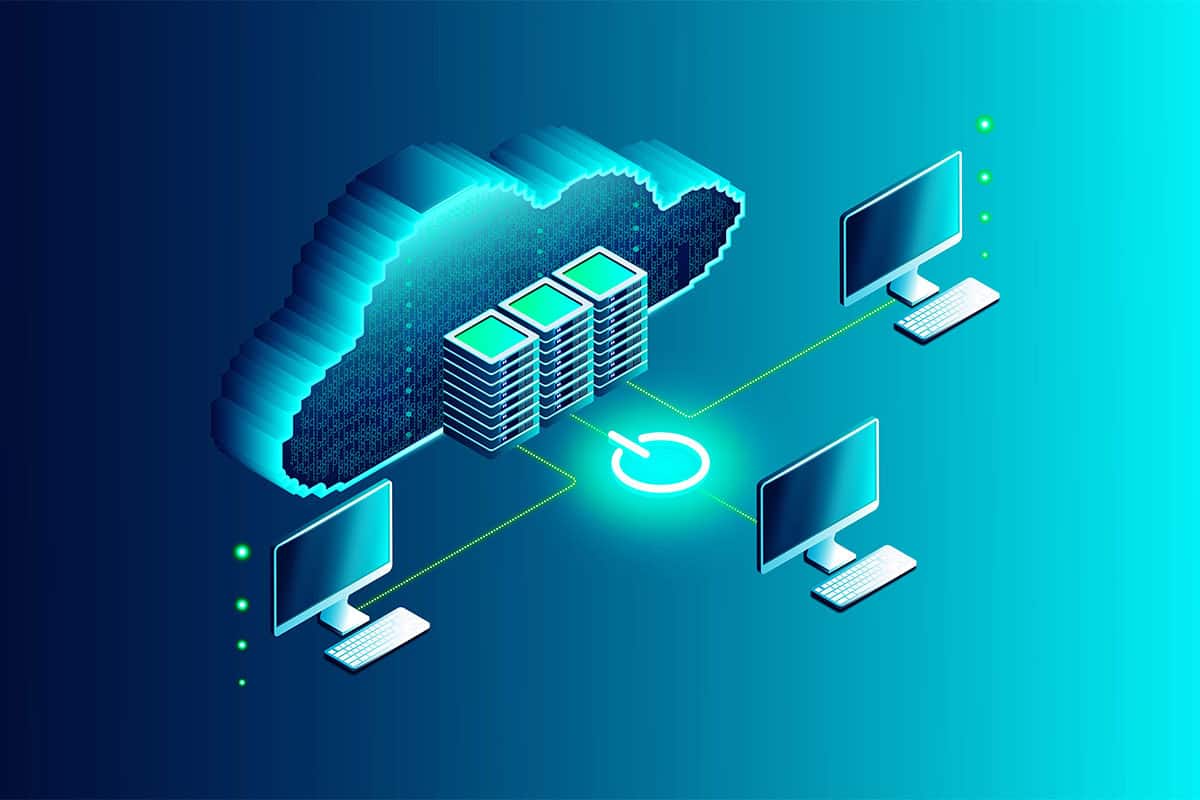
It’s important to note that repatriation does not mean abandoning the cloud entirely. The goal is not to go back to the 1990s; the goal is balance. The modern approach is a Hybrid architecture.

Commodity services like email (Microsoft 365), chat (Slack), and payroll is perfect for the cloud. They’re low bandwidth and require high availability. However, your core ERP database, your CAD file repository, or your archival storage might belong on a server in your building.
This split strategy allows you to leverage the cloud for what it does best (flexibility and collaboration) while using local hardware for what it does best (performance and cost control).
FAQs
Is managing an on-premise server difficult?
It requires expertise, but modern hardware is far more user friendly than in the past. You do need IT support to handle updates, security patches, and hardware monitoring. This is where a Managed Services Provider (MSP) is valuable. They can manage your local server remotely, giving you the benefits of ownership without the headache of daily maintenance.
What are “Egress Fees”?
Egress fees are charges that cloud providers apply when you move data out of their cloud storage. Putting data in is usually free (they want your data), but taking it out costs money. This can lead to “bill shock” if you decide to move large amounts of data or if you have high download volumes.
Is on-premise less secure than the cloud?
Not necessarily. The cloud offers world class physical security, but it is a massive target for hackers. An on-premise server is a smaller target and can be isolated from the public internet more easily. However, on-prem security relies entirely on your team. If you fail to patch your server, you are vulnerable. Security is about execution, not just location.
How do backups work if I leave the cloud?
If you move data back in-house, you are 100 percent responsible for disaster recovery. You cannot rely on Amazon or Microsoft to have a copy. A robust repatriation strategy must include a local backup (for speed) and an encrypted offsite replication (often to a cloud storage vault) to protect against fire or theft. This 3-2-1 backup strategy is non negotiable.
Strategy Over Trends
The pendulum of technology swings back and forth. Ten years ago, the trend was centralization in the cloud. Today, the trend is decentralization back to the edge. Smart business leaders do not follow trends blindly; they follow the math.
If your cloud bills are spiraling out of control or your team is frustrated by lag, it might be time to audit your infrastructure. At tekRESCUE, we help businesses analyze their workloads to determine the most efficient home for their data, whether that is in the cloud, on-site, or a mix of both.
Table of Contents