
Local Link Building for SMBs: Relationship Wins + Templates
Yes, local links still matter, and the fastest way to win them is to earn community-rooted backlinks while cleaning up your citations at the same time. Google’s own guidance confirms that prominence, built partly through links, shapes local ranking alongside relevance and distance. We recommend prioritizing earned local links over volume tactics, and keeping every placement compliant with FTC and Google rules.
TL;DR:
- Fix inconsistent citations across directories to ensure accurate business information and avoid verification issues.
- Reclaim unlinked mentions and seek links from high-authority, relevant local directories and resource pages.
- Build relationships through sponsorships, local press, and community content that generate durable, geographically relevant links.
- Verify and optimize your Google Business Profile, and ensure your website’s technical foundation supports effective link equity transfer.
- Focus on quality over quantity, track referral traffic and conversions from backlinks, and disclose paid links to avoid penalties.
Table of Contents
Table of Contents
- Quick local link wins you can implement this week
- Set up the technical and profile foundations so links count
- Core local link-building strategies and how to execute them
- Outreach templates and a simple workflow you can copy
- Measure link impact and avoid penalties or wasted effort
- What to expect: timeline and typical cost shapes
- How tekRESCUE approaches local link building, checklist and proof points
- Author perspective: why relationships beat shortcuts
- How tekRESCUE can help
- FAQ
- Sources
Quick local link wins you can implement this week
You don’t need a six-month campaign to start seeing movement. A handful of focused actions, done correctly, can tighten your local signal within days.
- Fix broken or inconsistent citations: Search your business name across the top directories and correct any mismatched name, address, or phone data, because inconsistent NAP confuses the systems that verify your business location.
- Reclaim unlinked mentions: Search your business name in quotes to find press or blog mentions without a link, then ask the site to add one, since an existing mention is easier to convert than cold outreach.
- Claim listings in two or three high-authority directories relevant to your industry, because a clean, active directory presence reinforces the prominence signal Google already weighs.
- Sponsor a local event, team, or page for a modest fee in exchange for a logo and link, since sponsorships tend to produce some of the most durable, geographically relevant links available.
- Pitch one local reporter or blogger with a specific, newsworthy angle tied to your business, because local press links carry real topical and geographic relevance.
- Add your business to a local resource or “best of” page in your niche, since these pages often rank well themselves and pass along steady referral traffic.
Each of these tasks takes an afternoon or less, and together they build a foundation that larger campaigns can stand on. The point isn’t to chase every opportunity at once. It’s to clear out the easy wins so your later, more deliberate outreach has clean ground to work from. Moz’s local link building guide distinguishes between traditional backlinks, unstructured citations, and linked unstructured citations, and quick wins like these usually touch all three categories at once.
If you run a service business with multiple locations or a defined service area, this same logic scales. Our B2B SEO strategies for local lead generation walk through how technology and service companies apply these same quick wins at scale without losing the personal touch that makes them work.
Set up the technical and profile foundations so links count
Links only do their job when the page receiving them, and the profile representing your business, are both in order. Skipping this step means paying for outreach that never converts into visibility.
- Verify and fully complete your Google Business Profile. Google states plainly that prominence, which links help build, is one of three primary local ranking factors, alongside relevance and distance, so an unverified or sparse profile wastes every link you earn.
- Standardize your NAP (name, address, phone) everywhere it appears. Pick the exact format you want to use and replicate it identically across your website, your profile, and every directory listing.
- Make sure the page you’re promoting is actually worth linking to. A thin “contact us” page rarely earns links. A detailed local landing page, neighborhood guide, or useful how-to resource gives outreach targets a real reason to say yes.
- Check your canonical tags so link equity consolidates on one version of each page instead of splitting across duplicates.
- Confirm your site performs acceptably on mobile and loads quickly, since a slow or broken experience undercuts the trust signal a new link is supposed to send.
Local search ranking is built on relevance, distance, and prominence working together, which means a technically sound, well-organized site converts incoming links into visibility far more efficiently than a cluttered one. We’ve seen this play out directly in our work building localized SEO strategies tailored to small businesses, where fixing the foundation often produces more lift than the outreach that follows it.
Get these fundamentals right before you spend a single hour on outreach. A perfectly placed link pointing at a broken or invisible page is effort wasted.
Core local link-building strategies and how to execute them
Once your foundation is solid, it’s time to build. These are the tactics that consistently produce relevant, durable local backlinks, each with a specific execution note so you’re not guessing at the next step.
Local directories and industry lists. Not every directory is worth your time. Evaluate each one by checking whether it’s actively maintained, whether competitors in your market are listed there, and whether it sends any real referral traffic rather than existing purely as a link farm. Semrush’s guide to local backlinks lists directory submissions among the core tactics worth pursuing, alongside sponsorships, partnerships, and localized content.
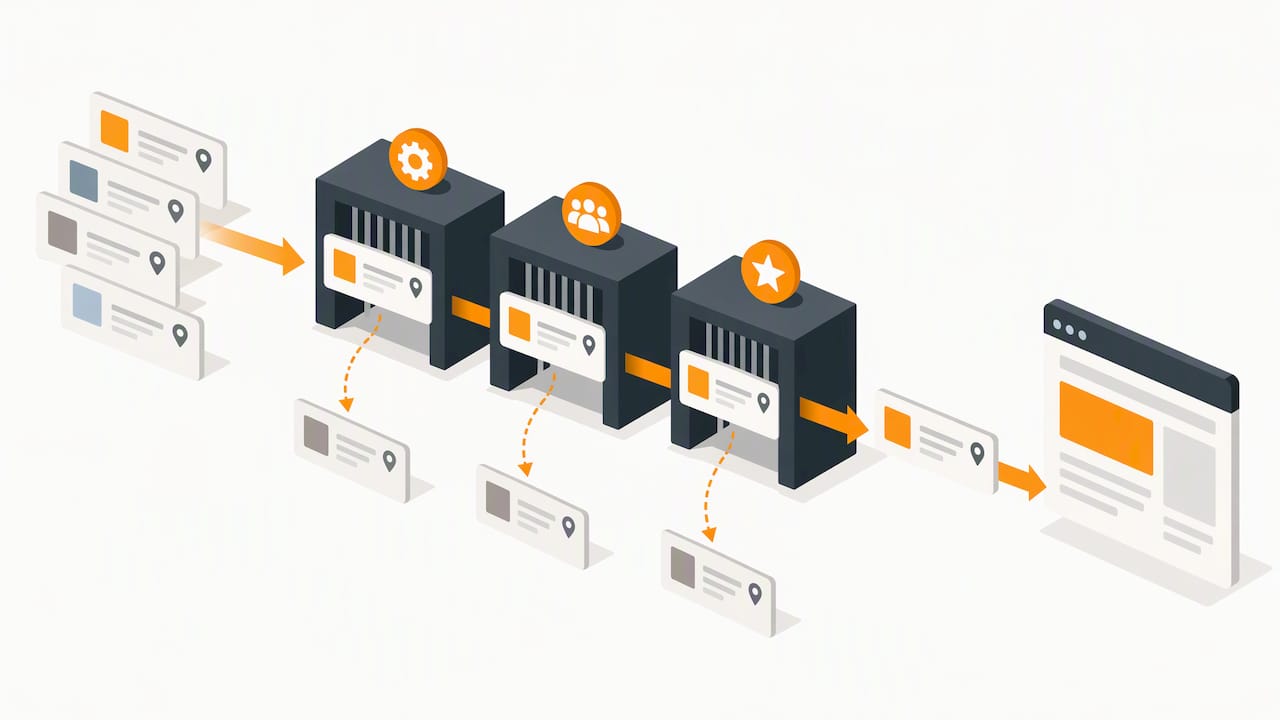
Sponsorships and event partnerships. Structure the ask clearly: offer a sponsorship fee in exchange for a logo placement, a backlink, and a short blurb describing your business. Keep the ask specific and limited rather than vague, since a defined, small-scale offer tends to close faster than an open-ended “exposure” pitch.
Localized content that earns links on its own. A neighborhood guide, a local pricing breakdown, or a checklist built around a regional regulation gives other local sites, bloggers, and reporters something concrete to reference. Think of it as a small data asset: specific enough to be useful, narrow enough to finish in a reasonable timeframe.
Local roundups. Search for phrases like “best [your industry] in [your city]” or “[your city] business roundup” to find bloggers and publications that regularly compile these lists, then pitch your business with a short note explaining what makes you a fit.
Local influencers and community sites. Identify bloggers, podcasters, and community Facebook groups with real local followings, not just large ones. A smaller, highly engaged local audience often produces more useful traffic and a more relevant link than a generic influencer with no geographic tie to your market.
Reclaiming mentions and broken-link opportunities. Beyond reclaiming unlinked brand mentions, search for dead links on local resource pages that once pointed to a now-defunct competitor or business, then offer your page as the replacement.
- Evaluate directories by activity, relevance, and referral potential before submitting.
- Keep sponsorship asks specific: logo, link, and a short blurb, not vague exposure promises.
- Build one local data asset (a guide or checklist) rather than generic blog content.
- Search roundup-style queries monthly to catch new pitching opportunities.
- Prioritize smaller, locally engaged influencers over broad-reach accounts with no geographic tie.
Pro Tip: Treat every sponsorship as a small, transparent transaction: a clear community benefit on your side, a simple link or citation on theirs.
A local event page might link to its sponsors the way this tech week event roundup does, crediting hosts and sponsors by name with a direct link back to their sites, a pattern worth studying when you’re deciding how to structure your own sponsorship ask.
Outreach templates and a simple workflow you can copy
You don’t need a polished PR department to run effective outreach. You need a short, specific message and the discipline to follow up without becoming a nuisance.
- Sponsorship ask template. Introduce your business in one sentence, state the sponsorship amount you’re offering, and specify exactly what you want in return: “a link to [yourpage] and a short mention in your sponsor list.” Clear asks close faster than vague ones.
- Local press pitch template. Lead with the newsworthy angle, not your business history. A reporter cares about what’s happening now (a grand opening, a community partnership, a local milestone) far more than a general company description.
- Follow-up schedule. Send your initial pitch, follow up politely after three to five days if you hear nothing, send a second reminder at the ten to fourteen day mark with one added detail (a photo, an updated offer, a relevant quote), then close the thread if there’s still no response.
- Track everything in a simple spreadsheet or CRM. Log the contact, the date of each touch, the ask, and the outcome, since local outreach is a volume game and memory alone won’t scale past a dozen contacts.
What you offer in exchange matters as much as what you ask for. Photos from a sponsored event, a quote for a local story, or a genuinely useful local data point all give the other side a reason to say yes beyond the money or link itself.
Measure link impact and avoid penalties or wasted effort
Not every link is worth the time it took to earn, and some are worth actively avoiding. Knowing which metrics matter keeps your effort pointed at results instead of vanity numbers.
- Track referring domains, not just total backlinks, since one link from twenty unique local domains beats twenty links from the same low-value site.
- Watch referral traffic from each link, because a link that sends real visitors is doing double duty beyond its ranking contribution.
- Monitor local pack visibility for your target terms over time rather than expecting an overnight jump.
- Check conversions tied to referral traffic, since a link that brings visitors who never convert is worth less than one that brings fewer, better-matched visitors.
Google’s local ranking guidance confirms that prominence, built in part through links, is one of three core local ranking factors, which is why quality and relevance matter more than raw link count.
On compliance: Google’s spam policies require that any paid link use rel=“sponsored” or rel=“nofollow” so it passes no ranking credit, and FTC guidance requires that any material connection, including a paid placement, carry a clear and conspicuous disclosure, since a hyperlink alone is often not considered sufficient disclosure. If you spot a cluster of obviously manipulative, irrelevant links pointing at your site, clean them up directly with the site owner first. Reserve a formal disavow request for cases where cleanup isn’t possible and the links are clearly damaging, not as a routine maintenance step.
What to expect: timeline and typical cost shapes
Local link building rewards patience more than any other part of SEO. Set expectations accordingly so you don’t abandon a program right before it starts working.
- Weeks 1 to 4: citation cleanup, directory submissions, and reclaimed mentions typically show up first, since these are mechanical fixes rather than relationship-dependent wins.
- Months 2 to 6: sponsorships, press pitches, and roundup placements build up gradually as relationships develop and content gets discovered.
- Ongoing: ranking movement in the local pack tends to follow with a lag behind the links themselves, compounding as your overall prominence signal strengthens.
Cost shapes vary by how you staff the work. Running it yourself costs staff time plus sponsorship fees, which can range from a modest event donation to a more substantial annual sponsorship package. Hiring it out typically means a project fee or an ongoing retainer, which tends to cost more up front but frees your time for running the business. Either way, treat local link building as ongoing maintenance, not a one-time campaign, since citation drift and content decay happen continuously.
How tekRESCUE approaches local link building, checklist and proof points
We build local link programs around the same compliance and relevance standards described above, drawing on our broader work in search engine optimization for small and midsize businesses. Our approach to compliance work, including HIPAA and FTC Safeguards Rule standards for regulated clients, carries over directly into how carefully we handle link disclosures and sponsorship terms.
Before we start outreach on any client engagement, we work through the same short audit every time:
- Confirm Google Business Profile verification status and completeness.
- Normalize NAP across the five directories where inconsistencies most commonly appear.
- Select two local landing pages worth promoting, based on content quality and conversion relevance.
- Prepare one local data asset, such as a neighborhood guide or practical checklist, as outreach bait.
- Build a list of twenty relevant local sites to pitch before sending a single email.
This groundwork keeps outreach focused and avoids wasting goodwill on pitches that were never going to land.
Author perspective: why relationships beat shortcuts
Here’s the uncomfortable truth about most local link shortcuts: they work right up until they don’t. A purchased link cluster can produce a short-term bump, but algorithmic systems increasingly neutralize manipulated patterns without so much as a manual action notice, quietly erasing the value you paid for.
Relationship-driven links don’t have that expiration date. A chamber of commerce listing, a sponsored Little League page, a local reporter who now has your number saved, these connections keep producing value long after the initial link goes live. Chasing quantity is a bet against an algorithm that keeps getting better at spotting the pattern. Building relationships is a bet on your own community, which is a safer wager every time.
— Randy Bryan
How tekRESCUE can help
If this all sounds like a lot to run alongside actually operating your business, that’s the gap we fill. We handle the audit, the citation cleanup, the outreach, and the local content creation that makes a link worth having in the first place, so you get the upside of a relationship-driven program without clearing your calendar to run it.
DIY works well if you have the time and enjoy the relationship-building side of outreach. Hiring it out makes sense when your calendar doesn’t allow for the weeks of follow-up that real local link building requires. Our SEO services cover exactly this kind of program, and when your outreach calls for a stronger landing page to point links at, our web development team builds the local pages worth linking to in the first place. Reach out and we’ll walk through what a local link audit would look like for your business.
FAQ
How do you build links for SEO?
Link building for SEO means earning placements on other websites that point back to yours, typically through outreach, content creation, partnerships, or directory submissions. For local SEO specifically, the most effective links come from geographically relevant sources like chambers of commerce, local press, sponsorships, and community sites rather than generic, high-volume link networks.
What is the 80/20 rule in local link building?
There’s no official standard defining a precise rule for link building, and the term is used loosely across the industry to suggest that a small share of tactics drives most of the results. In practice, that usually means a handful of high-relevance local links, from press, sponsorships, or community partnerships, tend to outperform a much larger volume of low-quality directory submissions.
How much does local link building cost?
Costs vary widely depending on whether you run the program yourself or hire it out. DIY costs are mostly staff time plus sponsorship fees, which range from small event donations to larger annual packages, while agency or project-based pricing is typically quoted directly based on the scope of outreach and content work involved.
Do citations count as links for local SEO?
Citations and backlinks are related but distinct: a citation is a mention of your business name, address, and phone number, which may or may not include a clickable link, while a backlink is specifically a hyperlink pointing to your site. Moz’s local link building guide distinguishes between unstructured citations, linked unstructured citations, and traditional backlinks, and both consistent citations and earned links contribute to local prominence.
Do I need to disclose a sponsored or paid local link?
Yes. FTC guidance requires that any paid or sponsored placement include a clear and conspicuous disclosure, and a hyperlink alone is often not considered sufficient on its own. Google’s spam policies also require rel=“sponsored” or rel=“nofollow” on any paid link so that it passes no ranking credit.
Sources
- Tips to improve your local ranking on Google – Google Business Profile Help
- Spam policies – Google Search Central
- FTC’s Endorsement Guides: What People Are Asking | Federal Trade Commission
- Essential Local Link Building Tactics – Moz
- Local SEO Backlinks: How to Build High-Quality Links – Semrush
Recommended
Table of Contents