Managed IT vs. Cybersecurity-First MSP: Why Standard Tech Support Isn’t Enough
For years, small and medium-sized businesses operated under a relatively straightforward agreement with their technology providers. When a printer stopped responding, an employee forgot a password, or a computer needed a software update, you called your Managed Service Provider (MSP). The focus was almost entirely on uptime, operational convenience, and fixing things when they broke.
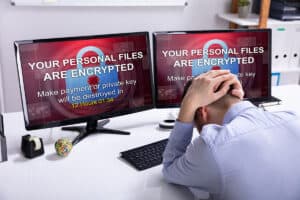
However, modern business security has fundamentally shifted. Attacks are no longer indiscriminate automated annoyances or isolated incidents targeting only Fortune 500 corporations. Today, small businesses are primary targets for ransomware, phishing scams, and data breaches.
Relying on traditional managed IT services for total defense is a dangerous mistake. Understanding the operational differences between a traditional managed IT provider and a cybersecurity-first MSP keeps your business online, compliant, and protected.
Table of Contents
The Traditional Managed IT Model

Traditional Managed IT Services were designed around efficiency and convenience. A standard MSP focuses primarily on maintaining system components so your team works without technical friction.
- Maintaining server uptime and workstation health.
- Managing basic software installations, licensing, and updates.
- Troubleshooting local network connectivity and device issues.
- Setting up new employee hardware and user accounts.
- Providing help desk support for day-to-day user requests.
While these operational tasks keep business running smoothly, standard MSP setups treat security as an afterthought. Basic security measures in a traditional model usually consist of commercial antivirus software, basic firewalls, and periodic data backups.
The core weakness of this traditional model lies in its reactivity. A standard MSP typically intervenes after a problem occurs or when a user submits a ticket. In the modern threat environment, waiting until an incident manifests means the damage is already done.
What Sets a Cybersecurity-First MSP Apart?
A cybersecurity-first MSP fundamentally alters the approach to technology management. Rather than viewing security as a single line item or an add-on feature, security serves as the base architecture for every device, user, and network rule.

At tekRESCUE, taking a cybersecurity-first approach means assuming that threats actively attempt to bypass your defenses at all times. Instead of relying on passive tools, a security-driven MSP integrates strict security standards, continuous monitoring, and proactive risk reduction directly into daily operations.
| Operational Area | Traditional Managed IT | Cybersecurity-First MSP |
| Primary Goal | Operational uptime and speed | System resilience and risk management |
| Security Strategy | Reactive patching and basic antivirus | Proactive threat hunting, EDR, and NIST standards |
| Data Protection | Local or scheduled cloud backups | Immutable, encrypted backups with rapid recovery protocols |
| Employee Support | Help desk troubleshooting | Ongoing security awareness training and phishing simulations |
| Compliance | Basic industry guidance | Direct alignment with regulatory frameworks like NIST and HIPAA |
Why Standard Tech Support Leaves Systems Exposed
Many business owners assume that paying a monthly fee for IT management automatically guarantees protection against threats. This creates a dangerous false sense of security. Three major structural gaps remain when using standard tech support:
- Antivirus Software Is No Longer Enough: Traditional antivirus relies on signature-based detection, meaning it looks for known file patterns associated with existing malware. Modern attacks rarely use basic malware. They utilize fileless attacks, zero-day exploits, and stolen credentials that pass right by standard antivirus software unnoticed. A cybersecurity-first provider deploys Endpoint Detection and Response (EDR) and threat hunting systems that analyze user behavior in real time, stopping unauthorized actions even if the software appears legitimate.
- The Human Element Remains Unprotected: Most successful network intrusions begin not with technical hacks, but with social engineering. Phishing emails, fake login portals, and credential harvesting trick employees into giving bad actors direct access to your network. Standard tech support typically resets a compromised password after the fact. A security-first partner conducts ongoing security awareness training, trains staff to spot malicious communications, enforces Multi-Factor Authentication (MFA), and limits network access based on strict principle-of-least-privilege policies.
- Backups Without Isolation Aren’t Secure: Having a backup drive connected to your main network was once considered sufficient. Modern ransomware explicitly targets and encrypts connected backup drives first before locking down the rest of your systems. If your MSP sets up automated backups without verifying their isolation, air-gapping, or regularly testing rapid restoration processes, your fallback plan breaks when you need it most.
The True Cost of Inadequate Protection
When evaluating technology management, business leaders often compare monthly service costs without factoring in the financial impact of a security incident. A failure in basic IT causes minor downtime, while a security breach threatens the survival of your organization.
- Standard IT Failures: Temporary downtime, productivity lag, minor repair fees.
- Cybersecurity Failures: Permanent data loss, ransomware payments, regulatory penalties, loss of client trust.
Beyond immediate monetary losses, businesses face regulatory fines if sensitive customer data leaks, particularly in fields like healthcare or financial services where HIPAA or NIST compliance is mandatory. Restoring client trust after a breach takes years, and many small businesses never recover financially.
Switching to a Security-First Technology Strategy

Upgrading your company’s security baseline does not mean compromising on everyday usability or support. An integrated approach lets your systems run smoother because proactive maintenance stops structural failures before they disrupt operations.
Aligning your business with a cybersecurity-first provider like tekRESCUE provides responsive help desk support paired with enterprise-grade protection frameworks. Technology must simplify your workflow while operating on a secure foundation.
FAQs
What is the main difference between an MSP and an MSSP?
An MSP focuses primarily on maintaining operational IT infrastructure, networking, and user support. An MSSP focuses exclusively on security, threat monitoring, and compliance. A cybersecurity-first MSP combines both models, handling everyday IT needs while embedding advanced security directly into the technical framework.
Is standard antivirus software enough to protect my business?
No. Standard antivirus relies on database signatures of known threats. Attacks today use tactics like fileless malware, zero-day vulnerabilities, and credential theft that bypass basic antivirus tools. Complete protection requires behavioral monitoring, Endpoint Detection and Response (EDR), and active network safeguards.
Why do cybercriminals target small businesses?

Cybercriminals target small businesses because smaller organizations often lack security infrastructure, making them easier targets. Attackers use automated scripts to search for unpatched software, weak passwords, and unprotected entry points across thousands of small networks simultaneously.
How does a cybersecurity-first approach impact daily productivity?
When implemented correctly, a cybersecurity-first strategy improves productivity. Security measures like Single Sign-On (SSO) and password management tools simplify user access, while active monitoring prevents downtime, software crashes, and operational disruptions.
What compliance standards should my business follow?
Compliance requirements depend on your industry and data types. Common standards include HIPAA for healthcare organizations, PCI-DSS for businesses processing credit card payments, and NIST frameworks for federal contractors or businesses seeking strong security baselines. A cybersecurity-first MSP helps identify and maintain the specific compliance standards your business requires.
Building a Security-First Foundation for Your Business
Basic tech support resolves everyday office issues, but it cannot protect assets, client data, or business operations against modern digital threats. Protecting your organization requires a partner who puts security at the center of every technical solution.
tekRESCUE specializes in managing technology while implementing security-first infrastructure designed around proven standards like NIST and HIPAA. Schedule a security risk assessment with our team today to review your current setup and fix vulnerabilities before an incident occurs.
Table of Contents